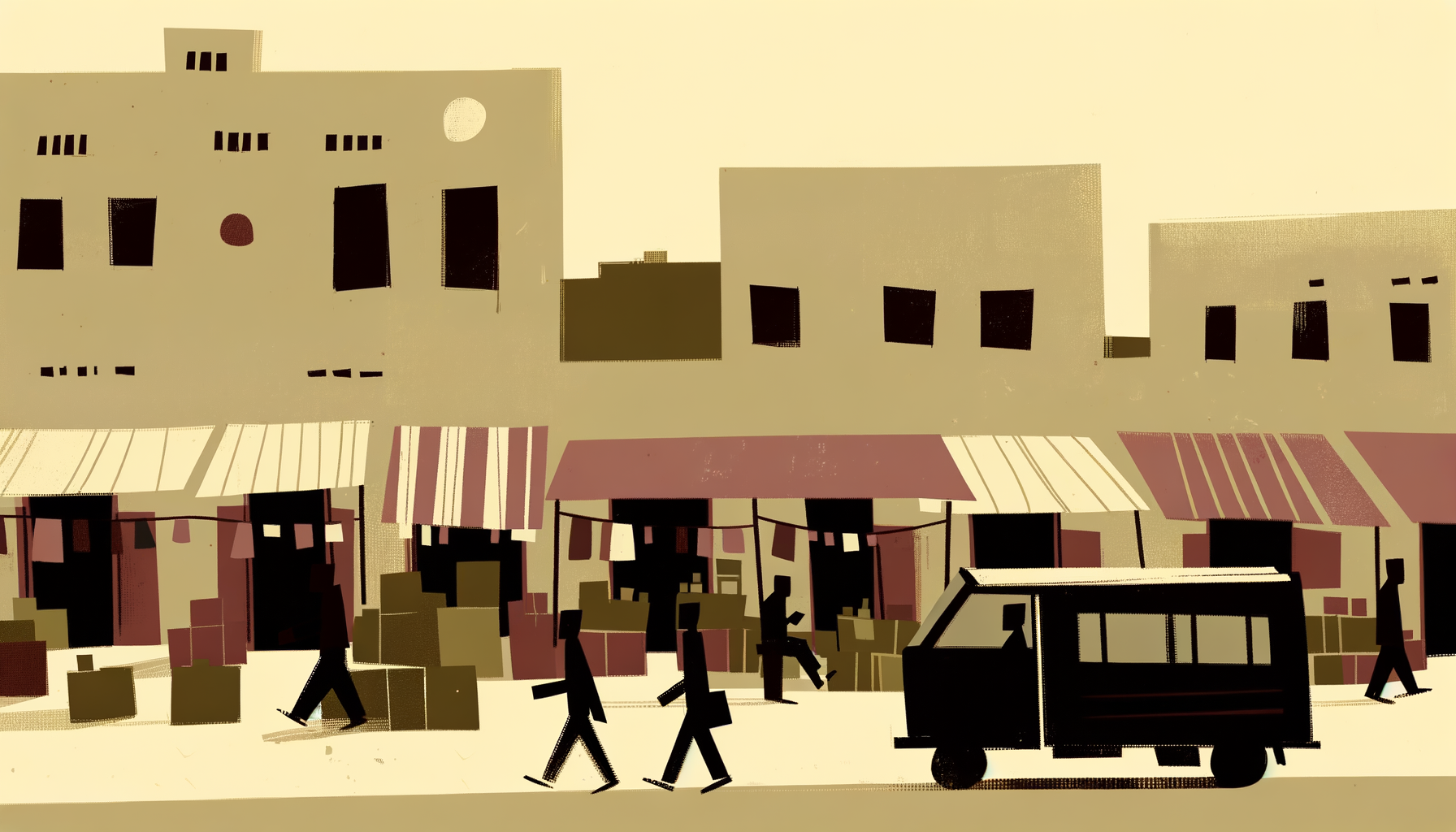
The first time it happens, you don't believe it.
You wake up. You open Instagram to post the breakfast special. The login fails. You try again. Your account has been disabled. You check your email — nothing useful. You submit the appeal form. Templated reply. You appeal again. Templated reply.
You do not know who to call. There is no one to call.
Your business is gone. Three years of photos, four thousand followers, the entire chain of DMs you used to remember which client wants their meat well done, which bride picked the pearl buttons, which corporate account pays in 30 days and which one pays in 90 — all of it sitting on a server you have no legal claim to, run by a company that owes you nothing and answers to nobody you can reach from Nairobi.
This happens every week. It happened to a baker in South B last month. To a tailor in Kisumu in February. To a furniture shop in Westlands who messaged us asking if there was anything we could do. There wasn't.
Most Kenyan businesses don't actually have a website
They have an Instagram page. A Facebook page if they are older. A WhatsApp number in the bio. And they call this "being online."
It is, in the technical sense, a presence. It is not, in any meaningful sense, theirs.
The platforms know this. They do not need to be hostile about it. They just need to be platforms. Being a platform means three things worth sitting with today:
- They can change the rules without warning.
- They can decide who sees your posts without explaining why.
- They can make your business disappear at 2am on a Tuesday and owe you nothing.
Renting is fine when you know you are renting. The problem is most people don't.
Why Instagram-as-website feels right
Let's be fair. The reasons people lean on social are rational.
A website sounds expensive. Hosting sounds technical. Every year or so someone builds you a site, it looks like a 2014 theme, nobody visits, and you go back to Instagram — because at least Instagram moves.
Meanwhile your Instagram is doing work. The comments happen there. The DMs happen there. The sales happen in the DMs. Payment lands in M-Pesa before the page finishes loading. That is not a mistake. That is a real observation about how Kenyans shop in 2026.
So nobody is saying delete your Instagram. Instagram is a good shopfront. Instagram is a terrible foundation.
A shopfront is where customers arrive. A foundation is what your business actually stands on. You need both. Most Kenyan SMBs only have the first one.
Owned versus rented
The clearest way to think about this: everything your business does online is on property you either own or rent.
Your Instagram page — rented. Your Facebook page — rented. Your TikTok — rented. Your Google Business Profile — rented (Google can and does suspend these). Your WhatsApp Business account — rented, and Meta has started disabling business accounts in Kenya for reasons that take weeks to untangle.
Your website — owned. Your domain — owned. The email list tied to that site — owned. Your customer phone list, collected with permission — owned.
A serious business is built mostly on the owned column and uses the rented column for reach. Most small Kenyan businesses are built almost entirely on the rented column, which is why so many of them are one platform decision away from starting over.
The small move
You do not need to burn down your Instagram tomorrow. Keep it. Keep posting. That is still where customers meet you for the first time.
But stop treating it as the whole thing. Start treating it as the shopfront it is. Put a foundation under it. One page. Your domain. Your pricing. Your contact. Your checkout.
The day you do that, the economics of your business change — quietly, permanently, and in your favour. And the day something happens to the shopfront — the outage, the suspension, the new rule, the algorithm shift — you will still have a business.
That, really, is the whole reason to do this.
Editor notes (Claude → Alex)
Primary: instagram vs website for business. Secondary: do I need a website for my business, why isn't my business on google. Slug: business-not-on-instagram.
What I changed (Draft 2): cut from ~1,500 → 780 words. Removed the entire five-cracks section and the economic-argument section (both hived off into Article 2 below, which now stands on its own). Kept the opening, thesis, "Instagram-as-website feels right", pull quote, owned-vs-rented, and close — the backbone you liked.
Typography: down to 2 fonts (Syne display + Inter body). Switched body from serif → sans for less bank-application feel.
Colour adds: orange accent bar on H2 headers, cyan rules + quote mark on pull quote, orange dots on list items. Cracks get colour-coded numbered badges (see Article 2). Background is warm cream with subtle dot-grain texture.
Byline: switched to "By Team Tokea" as requested.
Close: kept philosophical — no CTA, same as Draft 1.