It's 9:47pm in Kahawa. The day's cooking is done, the kids are asleep, and Wanjiku is doing the most important marketing of her day: posting five photos of tomorrow's mandazi and samosas to her WhatsApp Status. By morning, 214 people will have seen it. Six will reply "niko?" or "how much?" Two will actually buy. And by 9:47pm tomorrow, all of it — the photos, the views, the momentum — will be gone. Expired. So she'll do it again.
This is how a huge share of Kenyan business actually runs. Not on Instagram, not on a website — on WhatsApp. Status updates, broadcast lists, "DM for price," a Till number in the bio. It works, sort of. That's exactly the problem. It works just well enough that nobody stops to ask what it's costing them.
Here's the uncomfortable version: a WhatsApp Status is not a shop.
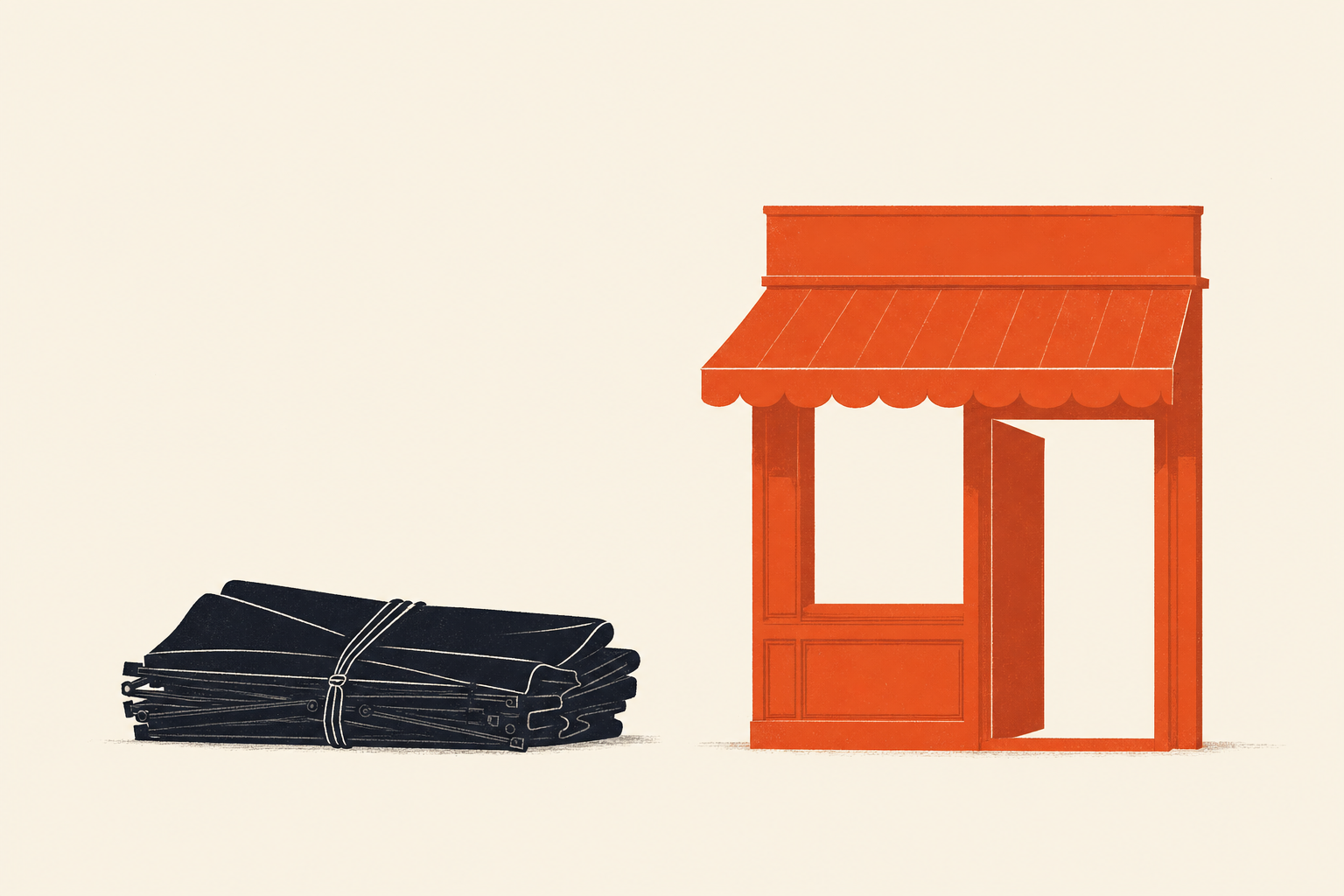
It's a shop that burns itself down every night and asks you to rebuild it by morning.
The 24-hour shop
Everything you post to Status has a 24-hour fuse — that's the whole design of the feature. Which means nothing you do compounds. The photos you shot, the caption you agonised over, the customer who saw it and thought "maybe next week" — all of it vanishes at midnight. Tomorrow you start from zero visibility again. You're not building an asset. You're renting attention one day at a time, and the rent falls due every single morning.
Contrast that with a page that just… stays. A product photographed once and still selling for you in March. A location, your hours, a price — sitting there working while you sleep. The difference between a Status and a website is the difference between a market stall you dismantle every night and a shop whose door stays where you left it.
Nobody is searching WhatsApp for you
Here's the part that quietly costs the most. Every day, Kenyans type things into Google — "cake delivery Nairobi," "tailor in Kasarani," "curtains near me." Those people are ready to spend right now. And your WhatsApp Status is completely invisible to all of them. You cannot be found by anyone who doesn't already have your number saved.
A real website is the one asset that shows up in that moment — when a stranger with money is actively looking for exactly what you sell. That's not vanity. That's the whole gap between the customers you already have and the thousands you'll never even meet.
You're building on rented land — again
We've made this argument about Instagram before — your business doesn't live there either. WhatsApp is the same trap wearing a friendlier face. Your contacts, your Status audience, your Business catalogue — all of it sits inside an app owned by someone else, run by rules you don't set and can't see. Accounts get restricted. Numbers change. A feature you built a habit around gets moved or quietly removed. When the ground is borrowed, you can be asked to leave at any time — and you leave with nothing.
A website for a small business in Kenya is the one piece of your presence you genuinely own. Your domain, your pages, your customer list — yours. Not a tenant on someone else's platform. The landlord of one small, permanent corner of the internet.
Keep WhatsApp. Build the thing that lasts.
None of this means abandon WhatsApp. WhatsApp is where the conversation happens, the order closes, the M-Pesa lands. Keep it. But a conversation is not a foundation. The Status will keep expiring at midnight, faithfully, forever. The only real question is whether — by morning — there's anything left standing that you didn't have to build again from scratch.